New World Screwworm in Goats: Signs, Prevention & Reporting
New World screwworm (NWS) is back in the news for the first time in decades, and goat keepers — especially in the southern and southwestern U.S. — should understand the basics now, before it becomes a local concern. This guide covers what NWS is, why it matters for a goat herd, how to spot it, how to prevent it, and the single most important thing you can do if you suspect it: report it.
What is New World screwworm?
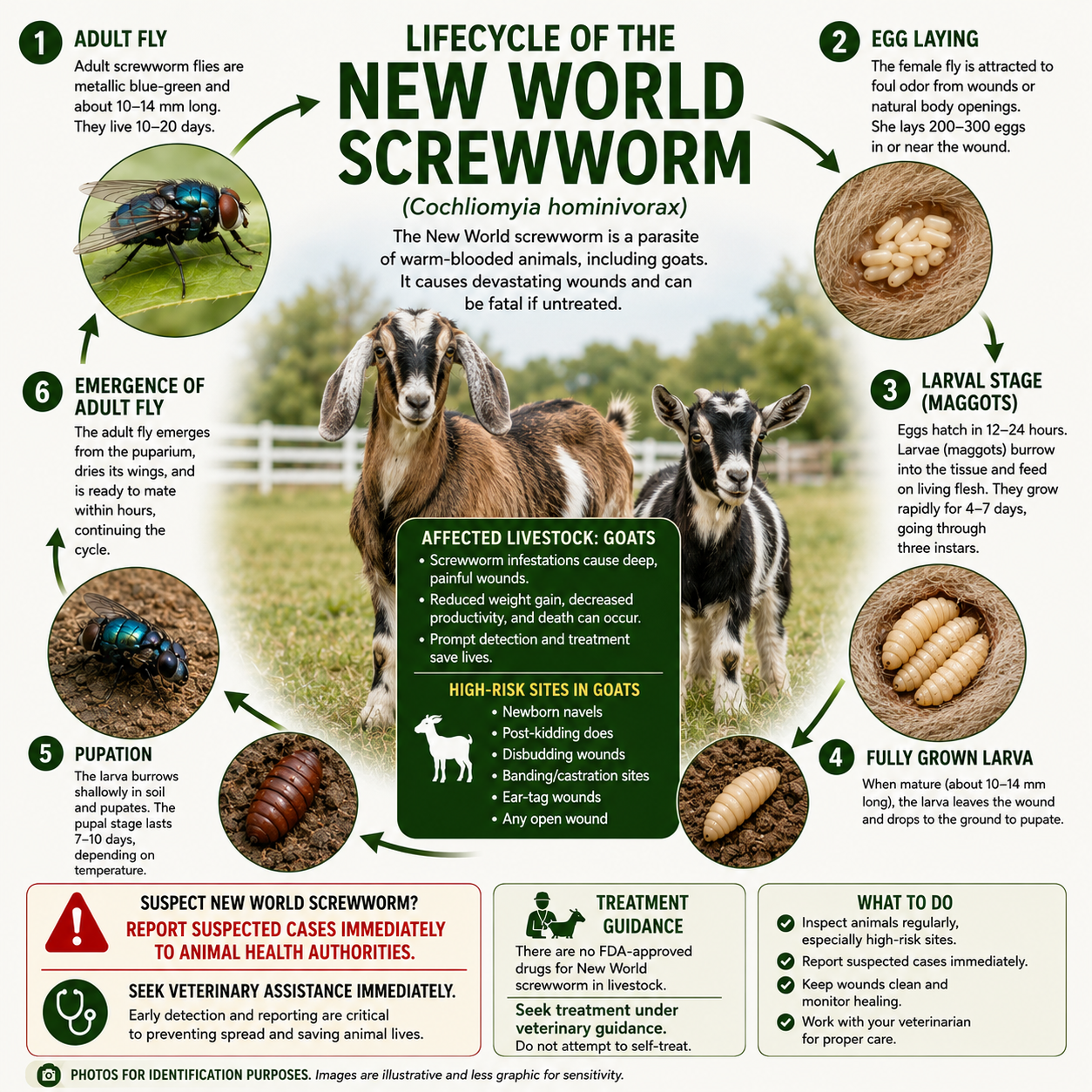
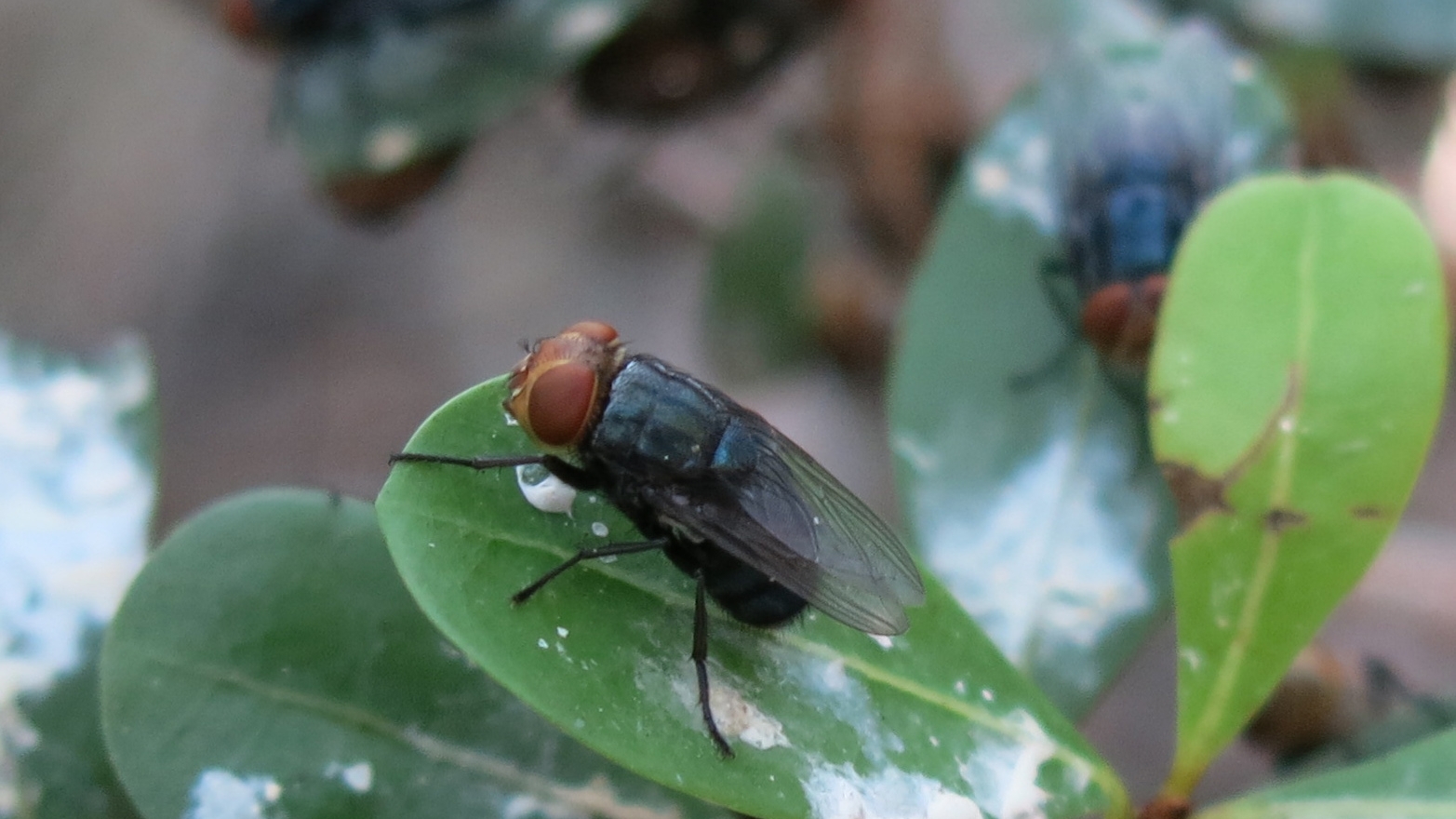
New World screwworm (Cochliomyia hominivorax) is a parasitic fly whose larvae feed on the living tissue of warm-blooded animals. That is what makes it different from the common flies you already deal with — most fly larvae feed on dead tissue and decaying matter, but screwworm larvae burrow into healthy flesh. The adult fly is slightly larger than a housefly, with orange eyes, a metallic blue-green body, and three dark stripes down its back.
Female flies lay their eggs at the edges of open wounds or around body openings. The eggs hatch within roughly 12 to 24 hours, and the larvae (maggots) burrow into the flesh — screwing inward as they feed, which is where the name comes from. As they feed, the wound enlarges and deepens, drawing more egg-laying flies. Left untreated, the damage can be severe and even fatal within about a week.
The United States eradicated screwworm decades ago using the sterile insect technique, and stamped out a small outbreak in the Florida Keys in 2016. But since 2023 the fly has been moving northward through Central America and Mexico, which is why it is a renewed concern today.
Why it matters for your goat herd
Goats are vulnerable because the everyday business of keeping them creates exactly the kind of small wounds and exposed tissue that attract egg-laying flies. A wound as small as a tick bite can be enough. The highest-risk situations in a goat herd are:
| Situation | Why it's high-risk |
|---|---|
| Newborn kids | The fresh, moist umbilical (navel) is a classic, high-risk site for egg-laying. |
| Does that just kidded | The vulva and perineum, especially if there was any tearing or trauma during birth. |
| Skin-breaking procedures | Disbudding, ear tagging or notching, castration (banding), tattooing, and hoof work all create wounds. |
| Everyday injuries | Fighting, fence scrapes, thorns, predator bites, and even tick or insect bites. |
| Body openings | Ears, nose, eyes, mouth, and genitals are all potential egg-laying sites. |
For your operation, an infestation is not only an animal-welfare emergency — it carries regulatory consequences. When NWS is detected, animal health authorities establish a control zone with quarantines, movement restrictions, and surveillance. That can affect your ability to move, sell, or show animals, which is one more reason early detection and prompt reporting matter for everyone in an affected area.
Signs to watch for
Catching an infestation early is the difference between a treatable wound and a life-threatening one. During a risk period, inspect wounds and body openings every day. Watch for:
- A wound that enlarges or deepens for no obvious reason
- Bloody or light-colored drainage from a wound
- A white or cream-colored runny substance (eggs) at a wound's edges
- Visible maggots in the wound or in a body opening
- A foul odor or smell of decay
- Irritated behavior, head-shaking, or obvious discomfort
- Reduced appetite, fever, or other signs of secondary infection
How and when to report
- Call your veterinarian right away if you observe any of the signs above. They can examine the animal, begin appropriate treatment, and collect larvae for identification.
- Report to your state animal health official and/or the USDA-APHIS area veterinarian in charge. Your vet is required to report suspected cases — but don't wait or assume it has been done. The faster the report, the faster the response.
- Find current contacts and outbreak information through USDA-APHIS and the unified government screwworm response site (Screwworm.gov).
Reporting is not just a formality. It is the single most important action a livestock keeper can take, because containment depends on early detection across many farms at once.
Make daily wound checks a habit
Herd Manager logs wound checks and recent procedures per animal with dates, so during a risk period the newborns, fresh-kidded does, and recently-banded kids are easy to find and check.
Track wound checks free →Preventative measures
Prevention comes down to three things: reduce wounds, protect the wounds you cannot avoid, and check your animals often.
Reduce and protect wounds
- Treat the navels of newborn kids promptly, and treat any fresh wound right away.
- Keep wounds clean and, where practical, covered so flies cannot lay eggs in them.
- In an infested area, postpone elective procedures that create wounds — disbudding, castration, ear notching, tail work — until risk has passed, wherever you safely can.
- Use veterinarian-approved wound treatments. Some products combine an antiseptic with an insecticide for wound protection in goats. Ask your vet what is appropriate, and always follow label directions and withdrawal periods.
Monitor closely
- Inspect animals — and every wound and body opening — daily during risk periods.
- Keep injured animals, fresh-kidded does, and newborns where you can check them easily and often.
- Pay special attention around kidding, since births create both wounds and vulnerable newborns at the same time.
General fly control and biosecurity
- Keep the environment clean — remove manure buildup, soiled bedding, and any carcasses promptly.
- Use fly traps and control measures suited to your setup.
- Protect against other wound-causing parasites like ticks.
- Practice good biosecurity: clean clothing, boots, vehicles, and equipment, and be cautious moving animals in or out of an infested area.
A note on people
Screwworm can, less commonly, affect people — so take care when handling animals with open wounds, especially if you have an open wound yourself. If you ever notice a suspicious lesion on your own body or suspect an infestation, seek medical attention. And to be clear about food safety: screwworm does not infest meat, fruits, vegetables, or other food sources, and authorities have stated the food supply is safe.
How Herd Manager helps
Early detection depends on consistent, documented wound checks — exactly the kind of routine that is easy to let slip when you are busy. Herd Manager helps you stay observant and organized:
- Log wound checks and health events for each animal, with dates, so you have a record of what you saw and when. That makes it easier to notice a wound that is changing, and to share an animal's history with your vet.
- Track newborns and recent kiddings so the animals at highest risk — fresh navels and post-kidding does — are easy to find and check.
- Record procedures like disbudding or castration, so you know which animals have recent wounds to keep an eye on.
- Keep your whole herd's health history in one place — vaccinations, treatments, vet visits — so if you ever need to act fast, the information is already organized.
Herd Manager is a record-keeping and management tool. It helps you keep good records and stay on top of routine checks — it does not diagnose disease and it does not replace your veterinarian.
Frequently Asked Questions
What is New World screwworm?
A parasitic fly (Cochliomyia hominivorax) whose larvae feed on the living tissue of warm-blooded animals, burrowing into open wounds and body openings. Unlike common flies that feed on dead tissue, screwworm larvae enlarge and deepen a wound and can be fatal within about a week if untreated.
What are the signs of screwworm in goats?
A wound that enlarges or deepens for no clear reason, bloody or light-colored drainage, a cream-colored runny substance (eggs) at the wound edges, visible maggots, a foul odor of decay, head-shaking or discomfort, and reduced appetite or fever. Inspect wounds and body openings daily during a risk period.
What should I do if I suspect screwworm in my goats?
Report it first — it's a reportable disease. Call your veterinarian and your state animal health official or the USDA-APHIS area veterinarian immediately, and find current contacts through USDA-APHIS and Screwworm.gov. Early reporting is what lets authorities contain the fly before it establishes locally.
How do I prevent screwworm in my goat herd?
Reduce and protect wounds: treat newborn navels and any fresh wound promptly, keep wounds clean and covered where practical, and postpone elective procedures like disbudding and castration during a local outbreak. Check vulnerable animals daily and use vet-approved wound treatments, following label withdrawal times.
Which goats are most at risk for screwworm?
Newborn kids (the fresh, moist navel), does that just kidded (vulva and perineum), animals with skin-breaking procedures like disbudding, castration, or tattooing, and any everyday injury from fighting, fences, thorns, or even tick bites. A wound as small as a tick bite can be enough.
Keep every wound check on record
Herd Manager logs wound checks, recent procedures, newborns, and kiddings per animal with dates, so during a risk period the animals that need daily watching are easy to find, and their history is ready for your vet. It's a record-keeping tool, not a substitute for your veterinarian.
Try Herd Manager Free →